Some days, your child leaves the tennis court smiling and talking about their best shot. Other days, they walk off frustrated, quiet, or convinced they never want to play again.
Perhaps they struggled to make contact with the ball. Maybe a drill felt too difficult, or another player seemed to get everything right. Whatever happened, the conversation afterward is an opportunity to help them feel supported—and learn that a difficult day does not have to stop their progress.
As parents and coaches, we can acknowledge their disappointment while encouraging them to give themselves another chance.
Start by Listening
When you can see that something went wrong, it is tempting to ask questions immediately: “What happened?” “Why weren’t you trying?” “Did you listen to your coach?”
Instead, start with a simple observation:
“That looked like a tough lesson. Do you want to talk about it, or would you rather have a little quiet time?”
Some children want to explain everything. Others need water, a snack, and a few minutes before they are ready. Giving them that space allows the conversation to happen when they can take part in it.
When a child says, “I’m terrible at tennis,” you do not have to agree—or insist that everything went perfectly. Try acknowledging the feeling:
“You’re frustrated because you wanted those shots to go in. I understand. One difficult lesson doesn’t tell us everything about your tennis.”
Remind Them That Everyone Has Good and Bad Days
Children, coaches, and professional players all have days when things feel easier and days when they struggle. Missing shots or feeling unmotivated sometimes is part of learning a demanding sport.
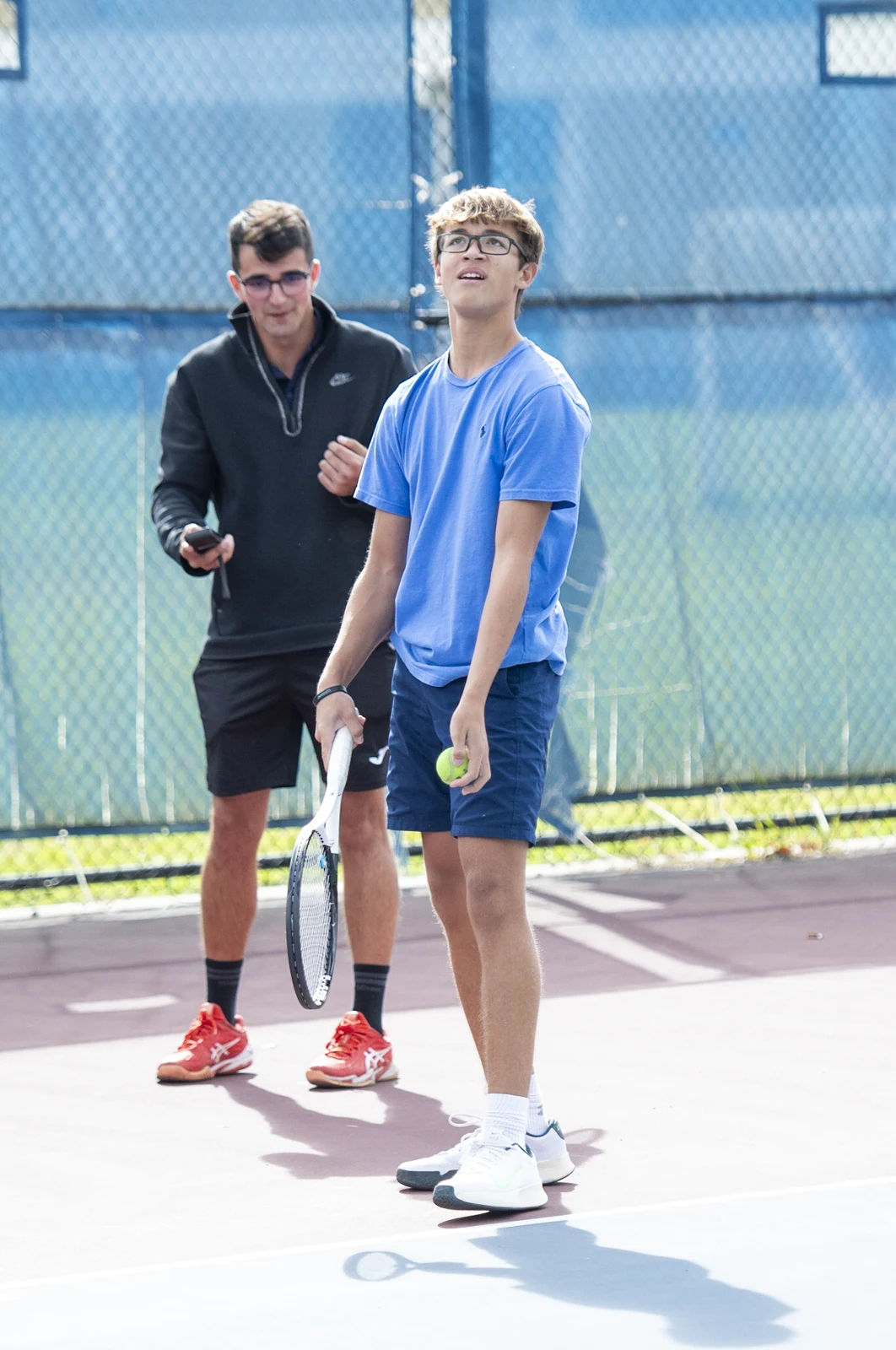
Coach Andreu knows that experience personally:
“Throughout my own tennis journey, I’ve had periods when my motivation was low. I didn’t always feel excited to practice, and there were days when things simply weren’t working. What mattered was continuing to show up and work through those periods.”
One or two disappointing lessons are not, by themselves, a reason to give up. If we stop every time something becomes difficult, we miss the opportunity to discover what we can do with patience and practice.
Parents can help children understand that they do not have to feel enthusiastic every single day to keep learning. Sometimes, the next step is simply returning to the court and being willing to try again.
You might say:
“We all have difficult days. Let’s give ourselves another chance at the next lesson, and we can ask your coach for help.”
Keeping going means making room for frustration while still taking a manageable step forward.
Notice Effort Your Child Can Recognize
Encouragement feels more meaningful when it connects to something your child actually did.
Instead of a general “Great job,” you might say:
- “I noticed you tried again after missing several shots.”
- “You asked your coach for help when the drill was confusing.”
- “You were kind to your partner even when you felt frustrated.”
These observations help children recognize that a lesson can contain something valuable even when the results disappoint them.
Only mention things you genuinely noticed. There is no need to invent a positive or turn every difficult session into a speech. Sometimes, “I enjoyed watching you play” is enough.
Focus on Their Own Learning
After a frustrating session, comparisons can make the disappointment heavier.
“Why can’t you hit like the other kids?” gives a child something else to worry about. Even a well-meant “You’re better than that player” shifts attention toward proving themselves against someone else.
Try asking:
“Was there anything that felt a little easier today than it did before?”
If the answer is no, let that be okay. Progress is not always visible in a single lesson. A child may need several attempts before a movement begins to feel comfortable.
The aim is to help them notice their own development over time, rather than judge every session against someone else’s performance.
Let the Coach Guide the Technical Work
Your child may already have spent the lesson concentrating on footwork, timing, and racket position. More instructions on the drive home can feel overwhelming.
If they ask for help, you can say:
“Let’s ask your coach what one thing would be most useful to work on next time.”
That gives the coach an opportunity to explain the process and keeps the message manageable. Parents can provide something equally valuable: patience, encouragement, and the reassurance that mistakes are allowed.
Choose One Small Goal for the Next Lesson
Once your child is ready, help them choose a simple intention for their next session.
It could be:
- Ask for another explanation when a drill feels confusing.
- Try the coach’s adjustment without expecting it to work immediately.
- Take a breath and get ready again after a missed shot.
Avoid goals such as “Don’t miss” or “Be the best.” Choose something your child can do even on a challenging day.
Ask:
“What is one thing you would like to try next time?”
A small goal gives them a reason to return and something within their control. It also makes “keep pushing” practical: show up, make an effort, and work on the next step.
At AK Tennis Academy, we want young players to enjoy tennis, learn to handle challenges, and build the confidence to keep trying. Good days give them encouragement. Difficult days give us an opportunity to support them through the learning process.
If your child is finding lessons challenging, talk with Andreu or Kat. Together, we can help them understand what they are working on and approach the next lesson with a manageable goal.
Explore our kids and junior tennis programs or contact our coaches.